
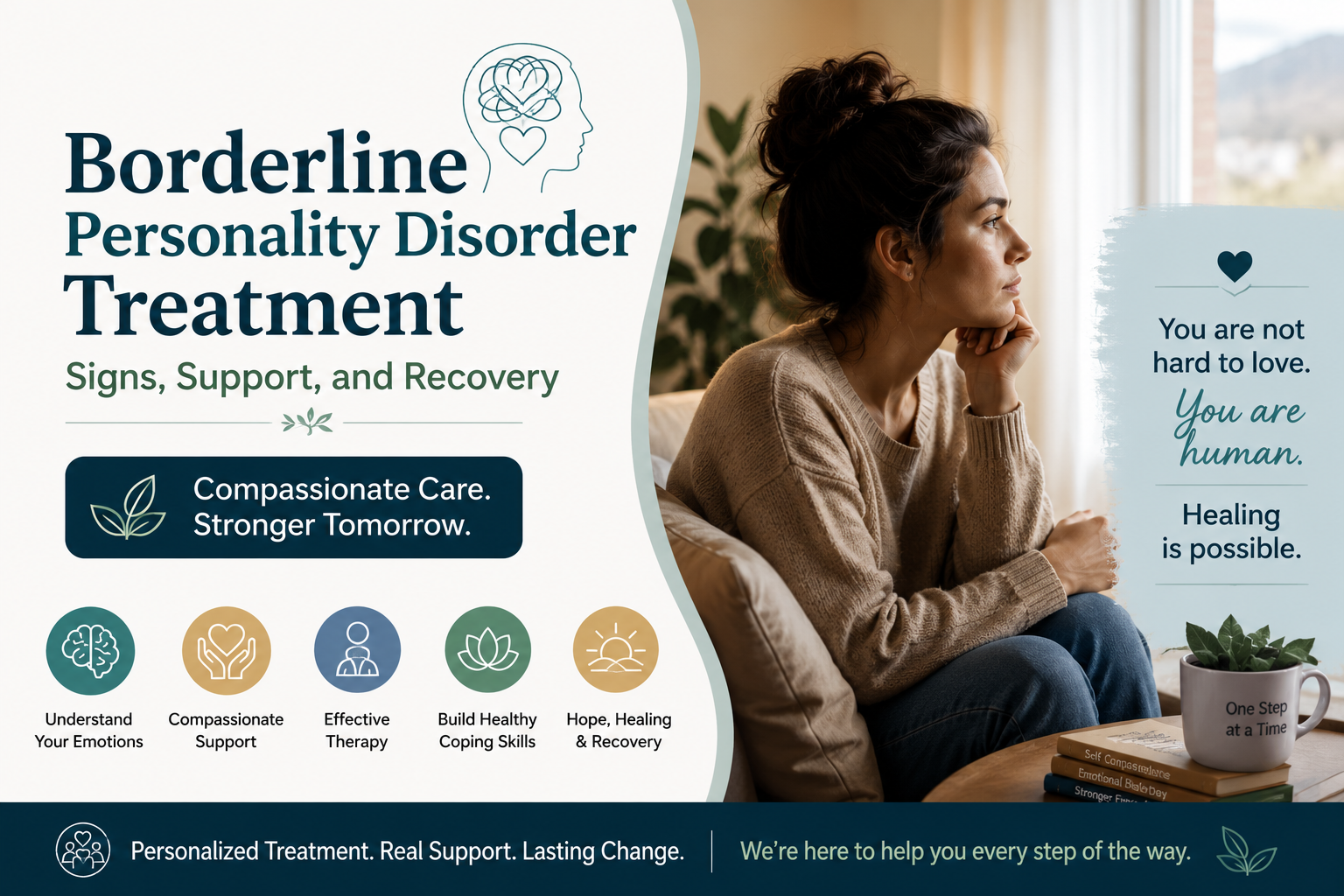
Living with borderline personality disorder can feel emotionally overwhelming and exhausting. Intense emotions, unstable relationships, fear of abandonment, and sudden mood changes can impact daily life in ways that feel difficult to manage alone.
The good news is that borderline personality disorder treatment can help individuals build emotional stability, healthier coping skills, and stronger relationships over time.
With proper support, recovery and long-term improvement are possible.
What Is Borderline Personality Disorder?
Borderline Personality Disorder (BPD) is a mental health condition that affects emotional regulation, relationships, self-image, and behavior.
People with BPD often experience:
- Intense emotions
- Rapid mood changes
- Fear of rejection or abandonment
- Difficulty maintaining stable relationships
- Impulsive behaviors
- Emotional overwhelm
Symptoms can vary from person to person, but the emotional impact is often significant.
Common Symptoms of Borderline Personality Disorder
Understanding the signs of BPD is an important step toward seeking support.
Some common symptoms include:
Emotional Instability
Strong emotional reactions that may feel difficult to control.
Fear of Abandonment
Many individuals with BPD experience intense fear of being left alone or rejected.
Unstable Relationships
Relationships may shift quickly between closeness and conflict.
Impulsive Behaviors
Some individuals engage in impulsive spending, risky behavior, or emotional reactions during stressful moments.
Low Self-Esteem
Negative self-image and feelings of emptiness are also common.
Why Borderline Personality Disorder Treatment Matters
Without support, BPD symptoms can affect:
- Personal relationships
- Work or school performance
- Emotional well-being
- Daily functioning
Seeking treatment does not mean something is “wrong” with you. It means you’re taking steps toward healing, emotional balance, and healthier coping strategies.
How Borderline Personality Disorder Treatment Helps
Professional treatment focuses on helping individuals:
- Understand emotional triggers
- Improve emotional regulation
- Build healthy communication skills
- Reduce impulsive reactions
- Strengthen self-awareness
Treatment is often personalized based on each person’s symptoms, goals, and emotional needs.
Therapy Options for Borderline Personality Disorder
Therapy is one of the most effective forms of treatment for borderline personality disorder.
Several therapy approaches may help:
Dialectical Behavior Therapy (DBT)
DBT is commonly used for BPD and focuses on:
- Emotional regulation
- Stress tolerance
- Mindfulness
- Relationship skills
Many people benefit from learning structured coping techniques through DBT.
Cognitive Behavioral Therapy (CBT)
CBT helps individuals identify negative thought patterns and replace them with healthier responses.
Individual Counseling
One-on-one therapy provides emotional support and a safe space to explore feelings, behaviors, and personal challenges.
Medication Management for Borderline Personality Disorder
There is no single medication specifically designed for BPD, but medication management may help address symptoms such as:
- Anxiety
- Depression
- Mood instability
- Sleep difficulties
A mental health provider may recommend medications as part of a broader treatment plan.
Can People Recover From Borderline Personality Disorder?
Yes.
Many individuals with BPD experience major improvements through consistent treatment and support.
Recovery may include:
- Better emotional control
- Healthier relationships
- Improved self-confidence
- Reduced emotional distress
Progress takes time, but positive change is possible.
The Importance of Compassionate Mental Health Support
People living with BPD are often misunderstood.
Compassionate care matters because it helps individuals feel:
- Heard
- Supported
- Safe
- Understood without judgment
Mental health treatment should focus on both emotional healing and practical coping strategies.
Supporting a Loved One With Borderline Personality Disorder
If someone you care about is living with BPD, support can make a difference.
Helpful approaches include:
- Listening calmly
- Encouraging professional help
- Setting healthy boundaries
- Avoiding criticism or shame
Supportive relationships can improve emotional stability and recovery outcomes.
Lifestyle Habits That Support Emotional Wellness
In addition to therapy and treatment, healthy routines can support emotional balance.
Helpful habits may include:
- Regular sleep schedules
- Physical activity
- Mindfulness practices
- Journaling
- Stress management techniques
These habits do not replace professional care, but they can strengthen overall mental wellness.
When to Seek Professional Help
It may be time to seek professional support if:
- Emotions feel overwhelming daily
- Relationships are constantly unstable
- Mood changes affect work or school
- Coping feels difficult without support
Early treatment can improve long-term emotional well-being.
Final Thoughts
Living with borderline personality disorder can feel isolating, but help is available.
With the right borderline personality disorder treatment, individuals can develop healthier coping skills, improve emotional stability, and build stronger relationships over time.
Healing is possible, and no one has to face emotional struggles alone.
If you or someone you love is struggling with emotional instability or symptoms of borderline personality disorder, Discovering Peaceful Minds Healthcare offers compassionate mental health support tailored to your needs.
FAQs About Borderline Personality Disorder Treatment
1. What is the best treatment for borderline personality disorder?
Therapy, especially DBT and psychotherapy, is commonly used to help manage BPD symptoms.
2. Can borderline personality disorder improve with treatment?
Yes, many individuals experience significant improvement with proper support and treatment.
3. Is medication used for borderline personality disorder?
Medication may help manage symptoms like anxiety, depression, or mood instability.
4. How long does BPD treatment take?
Treatment timelines vary depending on individual needs and consistency of care.
5. Can therapy help emotional instability?
Yes, therapy helps individuals develop coping skills, emotional regulation, and healthier relationships.