
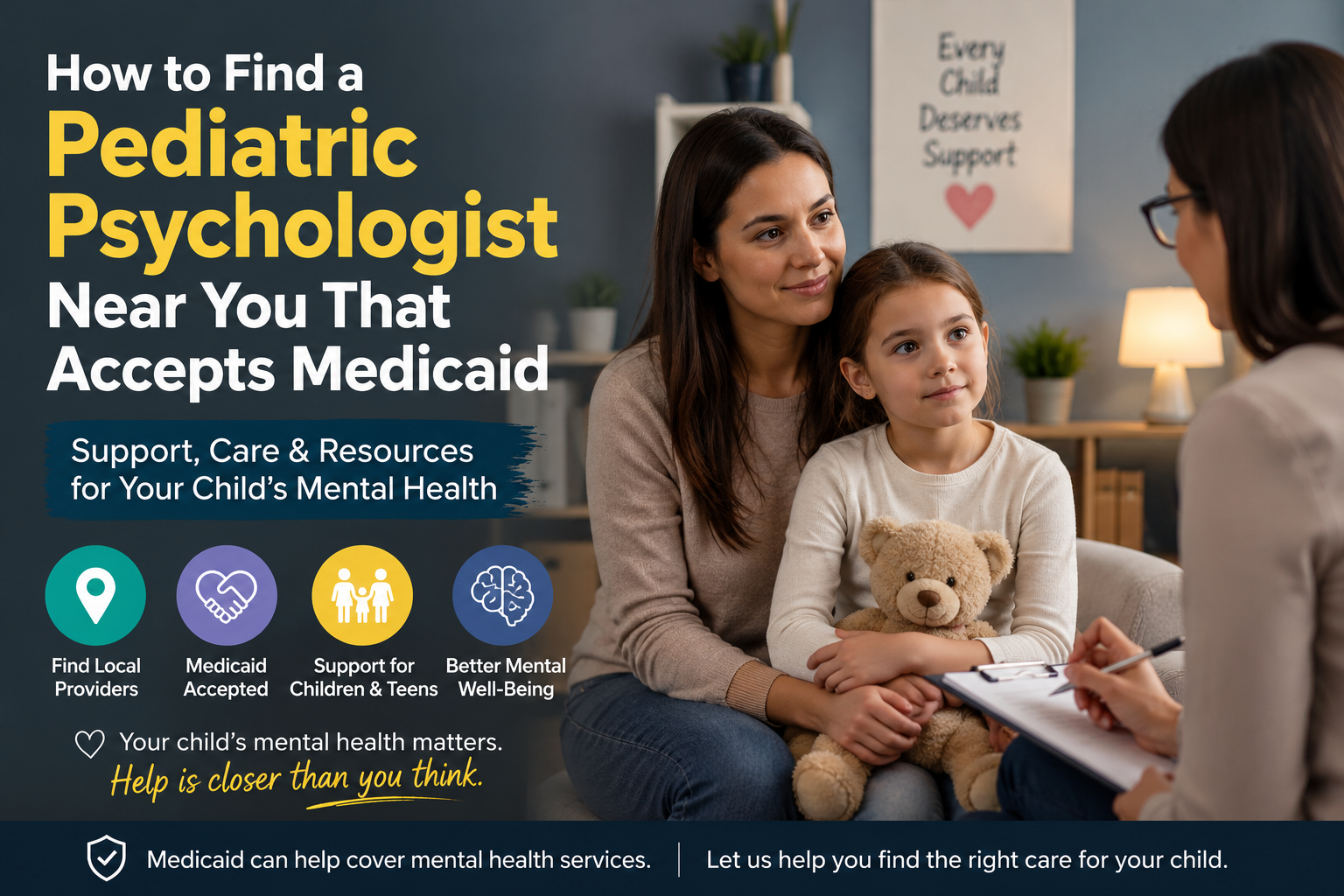
Finding the right mental health support for your child can feel overwhelming – especially when trying to find a pediatric psychologist near you that accepts Medicaid.
Many parents struggle to navigate:
- Insurance coverage
- Provider availability
- Long waitlists
- Questions about therapy and mental health services
The good news is that help is available, and understanding your options can make the process easier.
This guide explains how to find pediatric mental health services that accept Medicaid, what to look for in a provider, and when to seek support for your child.
Why Pediatric Mental Health Support Matters
Children and teens experience emotional challenges just like adults do. Anxiety, depression, stress, trauma, and behavioral concerns can affect:
- School performance
- Relationships
- Sleep
- Emotional development
- Confidence
Early support can make a major difference in a child’s emotional well-being and long-term mental health.
What Does a Pediatric Psychologist Do?
A pediatric psychologist specializes in supporting children and adolescents with emotional, behavioral, and mental health concerns.
They may help with:
- Anxiety disorders
- ADHD
- Depression
- Trauma and stress
- School-related challenges
- Behavioral concerns
- Emotional regulation
Some providers also work closely with families to create supportive environments at home and school.
Does Medicaid Cover Pediatric Mental Health Services?
In many cases, yes.
Medicaid often covers:
- Mental health evaluations
- Therapy sessions
- Behavioral health services
- Psychiatric care
- Medication management
Coverage varies by state and provider network, so it’s important to confirm details with the clinic or insurance provider directly.
How to Find a Pediatric Psychologist That Accepts Medicaid
1. Start With Your Medicaid Provider Directory
Most Medicaid plans offer an online directory of mental health providers.
Search for:
- Pediatric psychologists
- Child therapists
- Behavioral health specialists
- Psychiatric providers
This is often the fastest way to identify providers who currently accept your insurance.
2. Search Local Mental Health Clinics
Community mental health centers and behavioral health clinics frequently accept Medicaid and may offer:
- Child therapy
- Family counseling
- Psychiatric evaluations
- Medication support
Searching terms like:
- child psychologist Medicaid near me
- pediatric mental health services Medicaid
- child therapy Medicaid
can help you find local options.
3. Ask About Waitlists
Pediatric mental health services can have long wait times.
When contacting a provider:
- Ask about appointment availability
- Request cancellation lists
- Explore telehealth options
Virtual appointments may provide faster access to care.
Signs Your Child May Benefit From Mental Health Support
It’s not always easy to recognize when a child needs help.
Some signs include:
- Persistent anxiety or worry
- Mood changes
- Withdrawal from friends or activities
- Sleep problems
- Difficulty focusing
- Sudden behavioral changes
- Emotional outbursts
If these symptoms continue for weeks or interfere with daily life, professional support may help.
Questions Parents Should Ask a Pediatric Mental Health Provider
Before scheduling an appointment, consider asking:
- Do you accept Medicaid?
- Do you specialize in children or teens?
- What conditions do you commonly treat?
- Do you offer telehealth appointments?
- How involved are parents in treatment?
Finding the right fit is important for both the child and family.
Therapy vs. Psychiatric Care: What’s the Difference?
Parents are often unsure whether their child needs:
- Therapy
- Medication management
- Both
A psychologist or therapist typically focuses on:
- Emotional support
- Behavioral strategies
- Coping skills
Psychiatric providers may help evaluate:
- Mental health conditions
- Medication options
- Treatment plans
In some cases, a combination approach works best.
Supporting Your Child at Home
Professional care is important, but support at home matters too.
Parents can help by:
- Listening without judgment
- Creating routines
- Encouraging healthy sleep habits
- Reducing stress where possible
- Validating emotions
Children often improve when they feel safe, understood, and supported.
Mental Health Support Is a Strength – Not a Weakness
Some families worry about stigma or feel nervous seeking help.
But addressing mental health concerns early can:
- Improve emotional well-being
- Strengthen communication
- Build confidence
- Prevent symptoms from worsening
Seeking support is an act of care – not failure.
Finding the Right Support Takes Time
Finding a pediatric psychologist near you that accepts Medicaid may take patience, especially in areas with high demand.
Don’t get discouraged if:
- Providers have waitlists
- You need to contact multiple clinics
- The first provider isn’t the right fit
The right support can make a meaningful difference in your child’s life.
Final Thoughts
If you’re searching for a pediatric psychologist near you that accepts Medicaid, know that you’re not alone.
Mental health care is an important part of overall well-being, and finding the right provider can help children and families navigate emotional challenges with confidence and support.
Taking the first step toward help today can create positive change for your child’s future.
FAQs About Pediatric Psychologists That Accept Medicaid
1. Does Medicaid cover child therapy?
Yes, many Medicaid plans cover therapy and behavioral health services for children.
2. How do I find a pediatric psychologist that accepts Medicaid?
You can search Medicaid provider directories, community clinics, or local mental health providers.
3. What age does a pediatric psychologist treat?
Most pediatric psychologists work with children, adolescents, and teens.
4. Can children receive online therapy with Medicaid?
Some providers offer telehealth services covered by Medicaid.
5. When should I seek mental health support for my child?
If emotional or behavioral symptoms affect daily life, school, or relationships, professional support may help.